
The Humanist
When the Sky Goes Quiet: What the 2026 Eclipse and Perseid Meteor Shower Reveal About Insights Discovery Colour Energies
A total solar eclipse isn't the Sun switching off: it's two bodies of very different scale briefly sharing the same point in the sky.
On the night of August 12, 2026, a total solar eclipse and the peak of the Perseid meteor shower fall on the same night: the first time this has happened this century. For Insights Discovery practitioners, that pairing is more than a nice coincidence: it's a live, visible model of the four colour energies — Fiery Red, Sunshine Yellow, Cool Blue, and Earth Green — and how we move between our dominant and less-preferred styles. Below is how to read the night sky through that lens, and how to use it in a workshop, coaching session, or LinkedIn post.

What's actually happening in the sky on August 12, 2026?
Two rare events are stacking on the same night: the Moon fully crosses the Sun in a total solar eclipse, and after dark, the Perseid meteor shower — named for the constellation Perseus, from which the meteors appear to radiate — reaches its yearly peak. Light eclipsed, then light falling, inside the same 24 hours. Astronomically, these events aren't connected; what makes them useful here is the coincidence of timing and the image they create together.
Where do the Insights Discovery colours actually come from?
Insights Discovery's four colour energies aren't a standalone invention; they're a practitioner-friendly translation of Carl Jung's eight psychological types, first laid out in Psychological Types (1921). Jung paired two attitudes (Extraversion and Introversion) with four functions: Thinking, Feeling, Sensing, Intuition.
Insights grouped those eight combinations into four energies, each carrying an extraverted and introverted expression:
- Fiery Red → extraverted Thinking, underpinned by introverted Thinking
- Sunshine Yellow → extraverted Feeling
- Earth Green → introverted Feeling
- Cool Blue → introverted Thinking
Everyone carries all eight Jungian types, and all four colours, in different proportions. Getting typecast as simply "a red" or "a blue" misses the actual point of the model: the interplay between energies, not the label. It's a matter of behavioural and adaptative PREFERENCES, nothing to do with skills or competencies.
How is a solar eclipse like accessing your less-preferred colour energy?
A total solar eclipse isn't the Sun switching off, it's two bodies of very different scale briefly sharing the same point in the sky. For a few minutes, the brightest, most extraverted object we know goes quiet, and the solar corona, normally invisible, becomes visible.
That's a close visual match for what happens when a dominant Fiery Red or Sunshine Yellow energy makes room for the quieter Cool Blue or Earth Green underneath it. The dominant energy hasn't gone anywhere: it's still generating the light, it has just stepped back long enough for something usually hidden to show through. Practitioners describe this as accessing an "opposite" or less-preferred energy.
Let's see the eclipse as a fairly literal picture of that process.
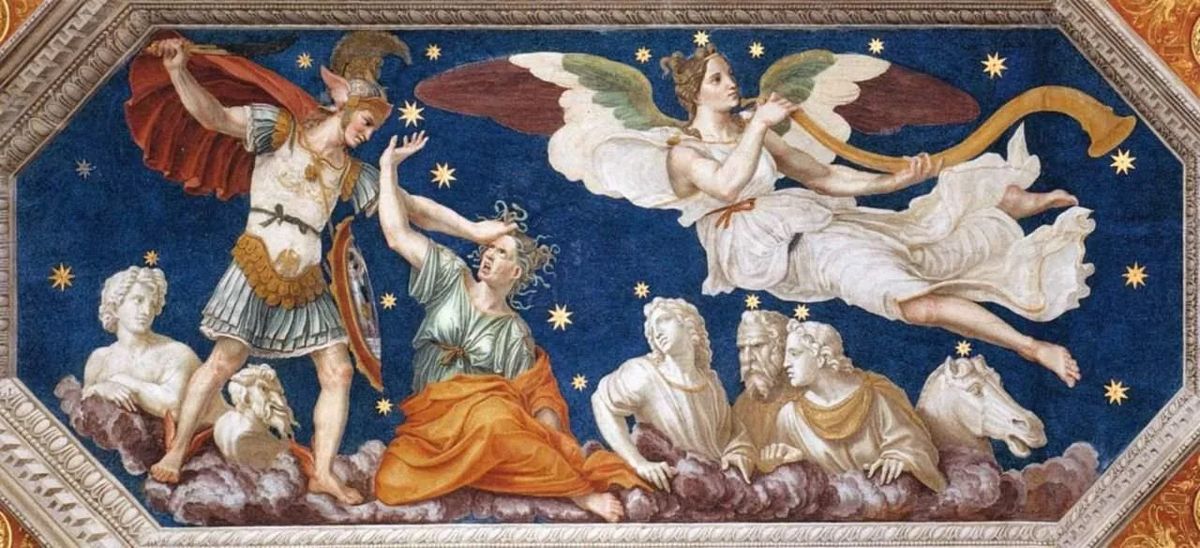
What does the myth of Perseus teach us about balancing all four energies?
The Perseid meteor shower takes its name from Perseus, sent in Greek myth to kill Medusa, on the surface, a pure Fiery Red task: decisive, fast, unwilling to freeze. But the way he actually completes it draws on every energy, not just one:
- Cool Blue: He doesn't charge in. He seeks counsel and gathers tools first, such as the mirrored shield, the winged sandals, the cap of invisibility.
- Considered thinking over brute force: He defeats Medusa using reflection rather than direct sight, meaning an indirect, deliberate solution rather than a head-on one.
- Earth Green and Sunshine Yellow: Afterwards, he doesn't simply leave. He rescues Andromeda, chained and abandoned, turning an act of care into a public, celebrated one.
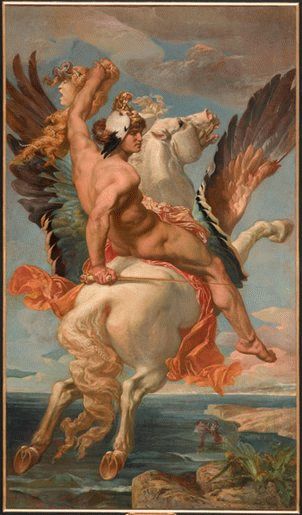
A hero's journey run entirely on Fiery Red usually ends badly. Perseus works because he draws on all four energies at the right moments:
- reflective before the strike
- decisive in the moment
- warm and expressive afterwards.
It's a workable model for how most real progress actually happens.
How to use this eclipse as a coaching or workshop metaphor
A few ways to bring this into a session, workshop, or LinkedIn post without overreaching into "the stars are speaking to you" territory:
- The eclipse as access to your less-preferred energy. Ask participants: what's your "Sun" (dominant energy), and what's the "Moon" that occasionally, briefly, gets to take the foreground?
- Perseus as a whole-wheel journey, not one colour. Useful for challenging the idea that any single colour "wins", as stated above effective action usually borrows from all four in sequence.
- Meteors vs. the eclipse. Meteors are small, frequent moments of a different energy showing through; the eclipse is one big, rare, total one. A clean way to talk about small daily flexes into a less-natural energy versus the rare, bigger stretch moments.
- Keep it reflective, not causal. Frame this as a seasonal device, not a claim that the eclipse causes any psychological effect: the sky supplies a striking image and a live audience looking up that night; the model does the actual explaining.